
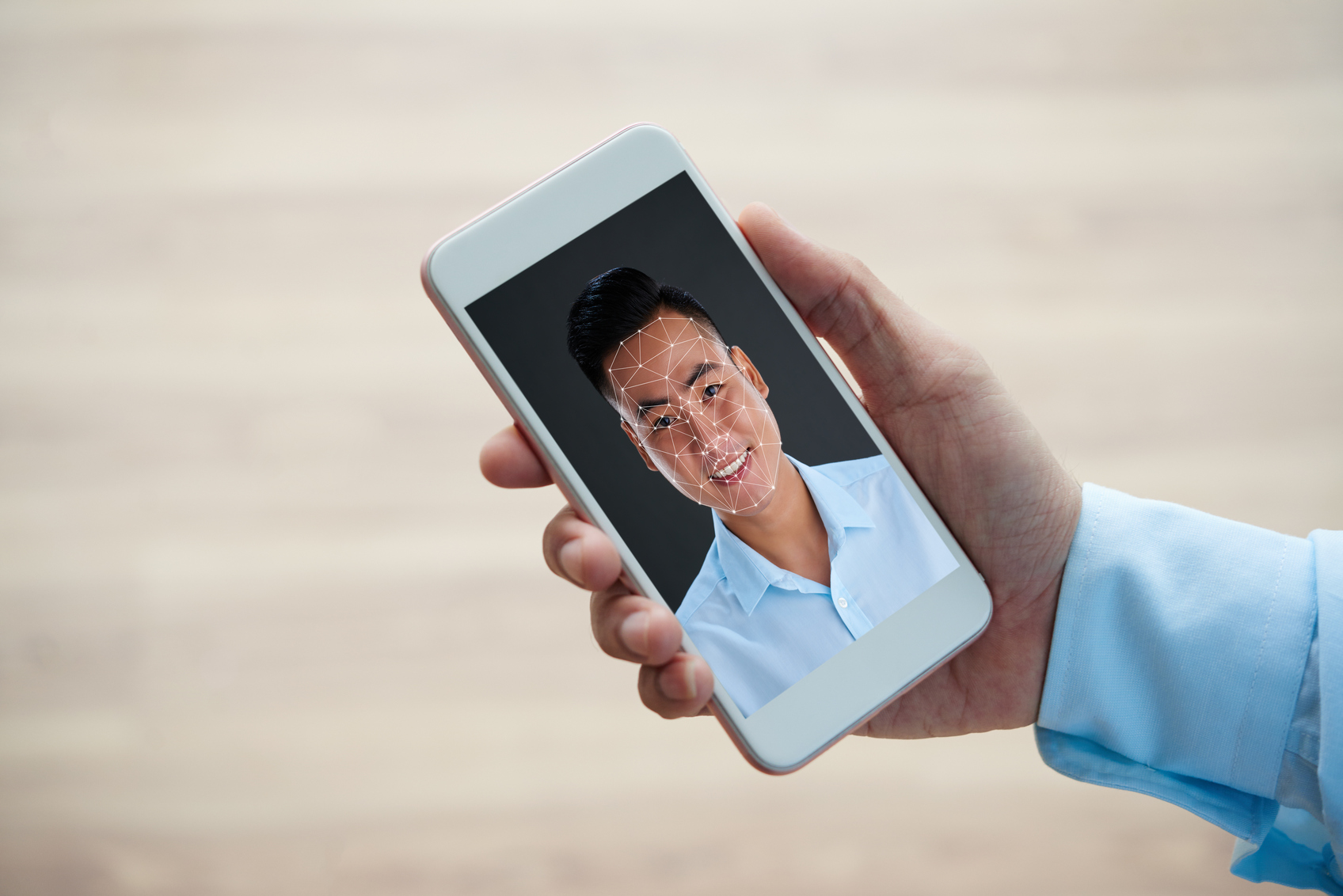
Where are biometric payments taking root the fastest: transport, retail, or cafes?
Today, it is difficult to surprise anyone with biometrics: from unlocking a smartphone using a fingerprint to paying for a travel ticket “by sight” – this technology has long penetrated the daily life scenarios of millions of Russians, and now it is changing the usual payment patterns.
The figures only confirm this trend. In the first nine months of 2025, Russians made about 146 million payments using biometrics, which is more than nine times more than in the same period of 2024, when there were only 16.1 million such transactions. In terms of cash, the growth is also impressive: from 21.6 billion rubles in 2024 to an impressive 112.6 billion rubles this year. And if you look at quarterly statistics, for example, for the third quarter of 2025, users conducted almost 50 million biometric transactions worth 38 billion rubles— six and nine times more than last year.
But what is behind these numbers? Why is biometrics gaining such popularity and where exactly is it taking root the fastest? Which industries benefit from the introduction of such solutions, and which are experiencing a real industrial revolution in the ways they interact with customers?
Let’s look together at why transportation, retail, and the catering industry — especially cafes and food courts — are setting the direction for the development of biometric payments and how these innovations can be the key to the success of any business.
What are biometrics, biometric data, and biometric payments?
To begin with, a bit of a match.
Biometrics is a modern identification and authentication technology that relies on a person’s unique physical or behavioral characteristics.
Unlike passwords or cards, biometric parameters cannot be forgotten, lost or transferred to another — they are truly individual and allow you to quickly and accurately determine who you are.
- Physical characteristics — fingerprints, palm vein pattern, face image, iris, hand geometry, voice.
- Behavioral features — handwriting, walking style, keystroke dynamics.
But we are interested in the first group, which is the most used today in everyday scenarios, which we are talking about.
Biometric payments (bioequaring) are a new way of paying for goods and services, when identity verification takes place not through traditional bank cards, smartphones or cash, but using biometrics.
The most popular ways today:
- Face payment: scanning and instant comparison of the buyer’s face with a “reference” biometric record to confirm the payment.
- Fingerprint payment: Often used in smartphones and self-service terminals.
- Voice payment: Transaction confirmation via voice biometrics in mobile apps and contact centers.
Now let’s see how bioequaring is integrated into various household scenarios and used to make payments in different situations. Let’s look at exactly where the technology performs best and how it adapts to the specifics of each segment.
Ideal scenarios for biometric payments: transportation, retail, cafes
Transportation: speed and contactlessness come first
Public transport is perhaps the most obvious platform for using biometrics. The main requirements here are the fastest possible passenger service and minimal contact.
Face-to-face payment systems, like Face Pay in the Moscow metro, allow you to pay for travel literally with a glance, which reduces the transaction time to a few seconds. This is especially critical during rush hours, when even a few extra seconds can create huge queues..
Since the launch of Face Pay in 2021, passengers have completed more than 125 million quick passes through stations with biometric payment.
Retail and food courts: avoiding queues and personalization
In retail and food courts, the goal of biometrics is to speed up the checkout process and save customers from exhausting queues. Biometric payments are particularly effective here because they are integrated with bonus programs and loyalty systems. When the system recognizes you by your face, it simultaneously identifies your loyalty card, applies accumulated bonuses, and offers personalized discounts — all in a single transaction.
For example, the Perekrestok chain launched a face-to-face payment service at self-service cash desks in 52 supermarkets back in 2021. The result was obvious: the time to pay was reduced, and the convenience for customers increased so much that the system quickly gained acceptance.
Currently, the introduction of biometric payments in retail does not require stores to develop their own solutions. It is enough to equip cash desks and self-service cash desks with terminals that support biometric payment.
It is also necessary to cooperate with an acquiring bank that supports this technology in order to accept biometric payments. The Bank provides the appropriate equipment, technology, and transaction processing.
Thus, to implement biometric payment, the store needs:
- Install compatible POS terminals.
- Enter into an agreement with an acquiring bank that supports biometric payments.
A key factor in the demand for technology in this segment was the lowering of the entry threshold. Ready-made technological solutions allow banks to launch bioequipping in the bank’s circuit without creating their own complex infrastructure. For example, our Bio Connect solution is already helping several banks to provide the ability to make payments using biometrics. Banks, in turn, connect their business customers to the biometric payment circuit faster.
Cafe: balance of speed and personalization
In cafes, biometric payments work according to a different principle. Here, the pace of service is more relaxed than in transport or on food courts, so the speed of payment is not so critical. However, biometrics brings another value here — personalization and convenience. The system recognizes a regular customer, can offer their favorite drink or apply a discount.
Here, biometrics becomes not just a payment tool, but a way to create a warmer and more personal interaction between the brand and the customer.
Transportation, fast retail, and cafes are exactly the everyday payment scenarios that millions of users face every day. If the technology has proven its effectiveness and safety in these basic and most widespread scenarios, it means that businesses have ample opportunities to deepen and expand the use of biometrics in all new areas and formats.
Which business formats benefit the most from the introduction of biometrics
As we can see from the examples above, bioequaring has already gone beyond simple payment and is able to transform entire business processes.
One of the most revealing scenarios is the automatic age verification when buying restricted goods: alcohol, tobacco, and in some cases even books. Instead of the traditional and often inconvenient procedure of showing your passport and waiting for confirmation from the cashier or administrator, the biometric system instantly checks the data with a Single Biometric System. This approach reduces the burden on staff, eliminates conflict situations, and at the same time preserves a single service scheme that is familiar to the customer.
Earlier, we talked about transport — and in particular about the metro — as one of the pioneers in the field of biometric payments. Success in this area opens up opportunities for further development and expansion of bioequaring. For example, in the transportation sector, biometrics can be effectively used to rent and pay for carsharing: age verification and trip payment are performed in one action, providing maximum convenience and speed for the user.
In fact, a universal model is being formed: biometrics as a single identification and payment service that scales from transport and retail to related areas — carsharing, pick-up points, access to events.
Businesses that connect to this infrastructure now receive not just a new way of accepting payments, but a competitive advantage in the form of a faster, seamless and personalized customer experience.
Blog
Lifestyle Banking: How to Turn Mobile Banking into a Super App and Increase Customer LTV
DBMS: what is it, how does it work, and what types are there?
Digital Ruble in 2026: which companies are required to accept it
Why development deadlines are falling short: the main problems of IT outsourcing and external teams