
Unified QR Standard: how the payment market is moving to a new infrastructure
Starting from September 1, 2026, the unified QR payment code of the National Payment Card System (NSPK) will come into force in Russia. All banks and trading and service enterprises will be required to use a universal payment code, a single interface that combines a Fast Payment System, a digital ruble, and additional services connected by businesses.
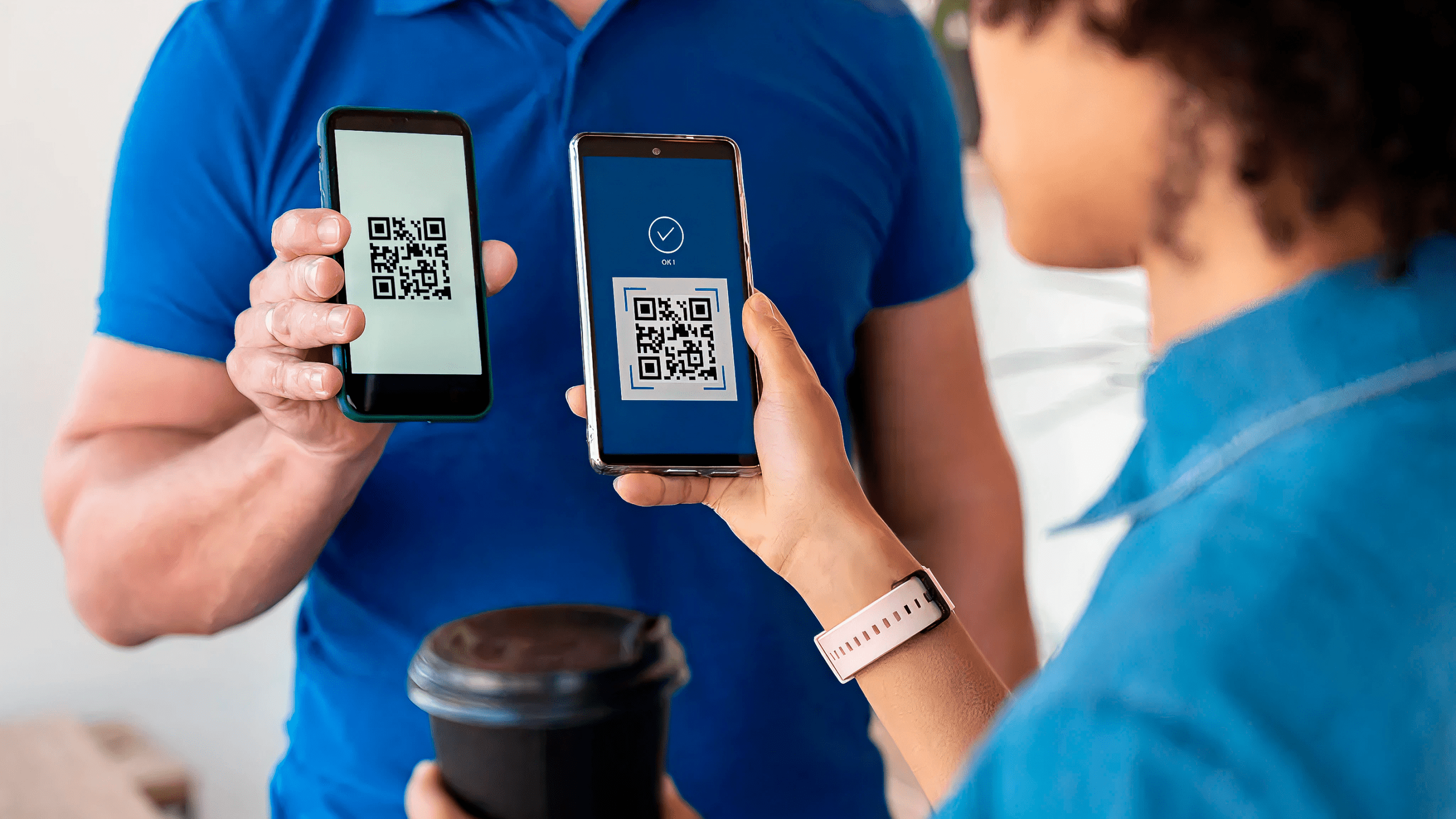
For the market, this means moving from dozens of disparate solutions to a standard that simplifies the payment process and reduces transaction costs. The buyer no longer needs to choose between QR codes of different banks: just point the smartphone camera, after which all available payment methods will automatically appear on the screen – from the SBP to the digital ruble.
The new standard opens up opportunities for businesses to unify payment processes, optimize fees, and reduce fraud risks. However, the transition to the CPC is also fraught with challenges: updating the cash register equipment, integrating new APIs, testing scenarios for working with the digital ruble, and restructuring internal payment scenarios.
How will the competitive landscape change? What new monetization and loyalty tools will retail chains have? And what technological requirements will companies have to take into account as early as 2025-2026 in order to avoid being caught up?
The new QR payment standard and what it means for the market
The amendments to the legislation adopted in July 2025 actually put an end to the discussion about “disparate” QR codes. For some time, the market existed in parallel solutions: banks developed their own QR payment codes (Sber, T-Bank, and others), and NSPK offered an alternative technology. For businesses, this resulted in additional integrations and the difficulty of supporting different technical protocols. For customers, there is confusion about which application to pay with and which QR code is “correct” at the checkout.
The introduction of the universal payment Code (CPC) is changing the architecture of the market. According to the new requirements, all participants — banks, retail outlets, acquiring operators — are required to switch to a single standard operated by the National Payment Card System (NSPK). In fact, the CPC becomes the basic infrastructure element for retail payments, combining the SBP, digital ruble and other payment methods in one interface.
For the industry, this means a shift from technology competition to service competition. Banks and payment players will be able to focus not on the struggle of QR solutions, but on the quality of customer scenarios, commissions, speed of transactions, loyalty programs and additional services on top of the basic standard. The retail business also benefits — a single protocol reduces the cost of integrations, accelerates the updating of the cash infrastructure and reduces operational risks.
In addition, in the coming years, the market will receive another infrastructure component — the digital ruble, which will begin to be widely used in parallel with the unified QR standard. The legislation stipulates that its integration is mandatory: systemically important banks must provide customers with the opportunity to conduct transactions with the digital ruble from September 1, 2026; banks with a universal license — from September 1, 2027; all other credit institutions — from September 1, 2028.
In fact, the digital ruble is becoming part of a new payment architecture. It, like the Fast Payment System, is included in the list of mandatory payment methods that are automatically displayed when scanning the universal payment QR code. For the user, this means a single interface: the SBP and the digital ruble, as well as any additional services connected by a specific outlet, will always be available on the payment page. For the market, this is the formation of a standard where key retail payment tools become complementary elements of a single ecosystem rather than alternative ones.
For the market, this means several structural shifts at once.
For business: the fragmentation of the payment infrastructure is reduced and the need to support parallel protocols disappears. A single connection standard simplifies integration, reduces the likelihood of technical errors, and reduces the cost of supporting payment solutions. In addition, the unification of the QR code opens up the market for new players: regional and small banks get the opportunity to connect to the infrastructure faster and launch products that previously required lengthy and expensive integrations. As a result, competition is shifting from technological differences to the quality of services and customer scenarios.
For users: interaction becomes easier and more predictable. It is enough to read the QR code once to get the full range of available payment methods — from the SBP and the digital ruble to additional services like Yandex Pay. At the same time, the usual mechanics remain: customers can still use their banks’ bonus programs, including cashback.
Thus, the universal payment code becomes not just another tool, but a new entry point into the Russian payment system — the basic interface around which the further development of the fintech market will be formed.
What’s new for business
The introduction of a universal payment code changes not only the regulatory environment, but also the very mechanism of user interaction with the outlet. The NSPK is creating a new scenario for the payment page: half of the screen space will be reserved for key payment methods — the digital ruble, SBP and plug-in services. The other half becomes a business tool.
The outlet gets the opportunity to use this screen as an additional communication module: to post a branded background, company logo, information about current discounts, promotions, accumulated bonuses or loyalty programs. Thus, the CPC turns not just into a technical gateway for payment, but into a full-fledged point of contact.
For a business, this means a significant increase in the impact on customer behavior at the time of the transaction. Previously, the payment process was almost completely “gone” into the banking application, but now the company gets a space for direct communication, which increases the likelihood of repeat purchases, increases the average receipt and enhances the effect of loyalty programs.
New technological nuances of the CPC
The transition to a universal payment code is accompanied not only by a change in the user scenario, but also by the emergence of new technological requirements. One of the key factors is the difference in transaction confirmation logic for different payment methods.
When paying through the Quick Payment System, the final transaction status is sent to the point of sale through the NSPK — the infrastructure is fully centralized. But for the digital ruble, which will become a mandatory part of the CPC starting in September 2026, the mechanism is different: the payment status is transmitted through a separate circuit that is not directly connected to the NSPK. This requires additional integration modules from banks and acquiring systems and complicates the development of unified cash scenarios.
To remove these technological barriers, there is already a special solution on the market — QR Connect. They allow you to automatically aggregate data on transaction statuses from different sources and transfer them to cash register systems in a single format. Such products make it easier for businesses to work with CPC, minimize the risk of errors and ensure the correct completion of operations in real time.
In addition, such tools give banks the opportunity to create their own payment pages on top of the CPC. This opens up a new layer of advantages for companies: advanced analytics of customer behavior, personalized communication scenarios, and additional points of impact at the time of payment.
Conclusions and a look into the future
The introduction of the universal payment code (CPC) forms a new architecture of the Russian payment infrastructure. The unified standard eliminates the fragmentation of the QR payment market, reduces the burden on businesses by unifying integrations, and makes the user experience more transparent and predictable.
For commercial and service enterprises, the CPC ceases to be only a mandatory technological element. It turns into a full—fledged point of contact with the customer – with the ability to create your own visual contour, demonstrate personalized offers and strengthen loyalty right at the moment of payment.
Banks and retailers should start preparing now: testing technological solutions, updating their cash infrastructure, and building new customer scenarios. Companies that approach the launch of the standard with a well-thought-out architecture of interaction and digital readiness will be able to use the CPC not only as a way to accept payments, but also as a tool for competitive advantage in the payment market of the future.
Source: Istockphoto.com
Blog

Open APIs of the Bank of Russia: Results of 2025, New Deadlines, Updated Standards

The digital ruble in Russia: results of 2025, launch dates and requirements of the Bank of Russia
Biometric payment in retail: how banks and stores simplify the customer’s journey

Development of an online acquiring platform: architecture, payment gateway, Back Office and a turnkey merchant portal